The month of Ramadan is when most Muslims, besides fasting, also perform the third pillar of Islam – giving Zakat. Therefore, we decided to remind the believers with this Friday sermon dedicated precisely to this prescription so that they understand its seriousness and importance!
RULES REGARDING ZAKAT
After praising Allah and sending blessings upon His Messenger, in today’s sermon I begin to speak about the rulings of the fourth pillar of Islam, i.e. zakat. In Arabic, Zakat means growth and increase, for example: “Zaka al-zar’u” means the seed has grown.
In the Shariah, zakat refers to the obligatory right that must be taken from the wealth that has reached a certain amount, under certain conditions, and given to specific groups of people.
Rules of zakat and evidence for it: Zakat is one of the five foundations of Islam, the most important foundation after the Shahada (testimony of faith) and Salah (prayer).
The Exalted Allah says: “And establish prayer and give zakat.” (Al-Baqarah, 43) Also, He says: “Take, [O, Muhammad], from their wealth a charity by which you purify them.” (At-Tawbah, 103)
The Messenger of Allah, peace and blessings be upon him, said: “Islam is built upon five foundations: Testifying that there is no deity but Allah and that Muhammad is the Messenger of Allah, establishing prayer, giving zakat, performing pilgrimage, and fasting in Ramadan.” (Agreed upon)
When sending Mu’adh ibn Jabal to Yemen, the Messenger of Allah, peace be upon him, instructed him: “Call them to testify that there is no god except Allah and that I am the Messenger of Allah. If they obey you in that, inform them that Allah has enjoined upon them five prayers in every day and night. If they obey you in that, then inform them that Allah has made obligatory upon them the giving of zakat from their wealth, taken from the rich among them, and given to the poor.” (Agreed upon)
Islamic scholars from all times and places are unanimous that paying zakat is an obligation.
Neglecting this duty is strictly forbidden and represents destruction of this magnificent faith. Failure to pay zakat entails punishment in this world and the hereafter. In this world, it results in the withholding of rain. Muhammad, peace be upon him, said:
وَلَمْ يَمْنَعُوا زَكَاةَ أَمْوَالِهِمْ، إِلاَّ مُنِعُوا الْقَطْرَ مِنَ السَّمَاءِ، وَلَوْلاَ الْبَهَائِمُ لَمْ يُمْطَرُوا
"Whenever people neglect paying zakat from their wealth, Allah prevents the rain from falling upon them. If it were not for the animals, the rain would not fall." (Authentic hadith, Al-Bayhaqi, Ibn Majah, Bazzar)
Regarding the punishment in the hereafter, Allah, Glory be to Him, says:
وَالَّذِينَ يَكْنِزُونَ الذَّهَبَ وَالْفِضَّةَ وَلاَ يُنفِقُونَهَا فِي سَبِيلِ اللَّهِ فَبَشِّرْهُم بِعَذَابٍ أَلِيمٍ يَوْمَ يُحْمَى عَلَيْهَا فِي نَارِ جَهَنَّمَ فَتُكْوَى بِهَا جِبَاهُهُمْ وَجُنُوبُهُمْ وَظُهُورُهُمْ هَذَا مَا كَنَزْتُمْ لأَنفُسِكُمْ فَذُوقُواْ مَا كُنتُمْ تَكْنِزُونَ
“Indeed, those who hoard gold and silver and do not spend it in the way of Allah – give them tidings of a painful punishment. The Day when it will be heated in the fire of Hell and seared therewith their foreheads, their sides, and their backs, [it will be said], ‘This is what you hoarded for yourselves, so taste what you used to hoard.’” (At-Tawbah, 34-35)
In this regard, there is also the hadith of the Messenger of Allah, peace be upon him, where he said:
مَنْ آتَاهُ اللَّهُ مَالًا ، فَلَمْ يُؤَدِّ زَكَاتَهُ ، مُثِّلَ لَهُ مَالُهُ يَوْمَ الْقِيَامَةِ شُجَاعًا أَقْرَعَ ، لَهُ زَبِيبَتَان ، يَأْخُذُ بِلِهْزِمَتِهِ يَوْمَ الْقِيَامَةِ ، ثُمَّ يَقُولُ : أَنَا مَالُكَ ، أَنَا كَنْزُكَ
"Whoever Allah grants wealth but does not pay its zakat, on the Day of Resurrection his wealth will appear to him in the form of a huge bald snake with two black spots over the eyes. It will coil around his neck and bite his cheeks, saying, 'I am your wealth, I am your treasure!'" (Bukhari)
Benefits of paying zakat
Paying zakat has numerous benefits both for the one who gives and the one who receives. These benefits include:
1 – Fulfilling one of the foundations of Islam, a faith which guarantees happiness in this world and the hereafter.
2 – Paying zakat brings a person closer to Allah, increases faith (Iman), as zakat is also referred to as sadaqah (charity), which comes from a word related to sincerity (sidq). Thus zakat reflects the sincerity of one’s faith.
3 – There are numerous rewards from Almighty Allah connected to zakat. He says: "Allah destroys interest and gives increase for charities." (Interpretation of Al-Baqarah, 276) and: "But whatever you spend in zakat seeking the countenance of Allah - it is those who will get a multiplied reward." (Ar-Rum, 39)
4 – Zakat purifies wealth and invokes Allah’s blessing upon the remaining wealth.
5 – The one who pays zakat purifies himself from greed and stinginess, sin and misdeeds, as the Prophet, peace be upon him, said: "Charity extinguishes sin as water extinguishes fire." (Ibn Hibban, Sahih) It also accustoms the believer to sharing their wealth on the path of Allah.
6 – Zakat fulfills the needs of poor Muslims.
7 – Zakat strengthens brotherly relations among Muslims, spreading love and awareness of mutual support; when a wealthy Muslim gives zakat to a poor Muslim brother, envy and hatred towards the wealthy brother find no place in that poor man's heart.
8 – Paying zakat expresses gratitude to Almighty Allah for the blessings of wealth He has bestowed.
Who is obligated to pay zakat?
Zakat is obligatory upon anyone who meets the following conditions:
1 – Being Muslim. Zakat is not accepted from non-believers, as it is a worship act that is only accepted from Muslims.
2 – Possessing the nisab – a minimum threshold of wealth, after which zakat is obligatory.
3 – Ownership of that amount of wealth for one full lunar year. The Prophet, peace be upon him, said: “There is no zakat on wealth until a year passes over it.” (Ibn Majah etc., authenticated by Sheikh Albani in Irwa al-Ghalil, 787)
Ruling for one who denies the obligation of zakat or does not pay it out of stinginess
Whoever deliberately denies the obligation of zakat with knowledge and without any coercion becomes a disbeliever. If done out of ignorance, because the obligation was unknown to him due to lack of knowledge, that person remains Muslim but should be taught about the obligation of zakat.
As for the one who acknowledges the obligation but refuses to pay out of stinginess, this does not make him a disbeliever, because the Prophet, peace be upon him, said about one who accumulates gold and silver and does not give from it in the way of Allah, his path on the Day of Judgment will be either to Paradise or Hell; if his act made him a disbeliever, Paradise would not be an option. However, if there is an Islamic authority, it must take the zakat from him, even forcibly, as that zakat is the right of others.
Types of wealth that zakat is due upon
Zakat is due on certain types of wealth under specific conditions: gold and silver, grains and crops harvested from the field, livestock, and commercial goods.
On gold, 2.5% is due if it exceeds 91.6 grams, and on silver the same percentage if it exceeds 641.5 grams after one lunar year.
On money reaching the nisab, which this year is 3090 euros, after a full year, 2.5% is given as zakat.
On crops, 5% if watered by irrigation, 10% if watered naturally by rain or river, and 7.5% if both types of watering are used, if the harvest exceeds 612 kilograms.
Regarding livestock, the Prophet, peace be upon him, said: “Owner of camels, cattle, and sheep should pay zakat on them; on the Day of Judgment they will come larger and stronger, goring him with their horns and trampling him with their hooves. After the last one passes, the first will return, and so it continues until the matter is decided among people.” (Muslim)
Livestock must be in certain numbers: at least 5 camels, 30 cows, and 40 sheep. This number must be maintained for the entire year, not less.
Animals must graze in pastures for most of the year and be intended for breeding, not for work or trade.
Regarding commercial goods, the Almighty Allah said: “O you who have believed, spend from the good things which you have earned.” (Al-Baqarah, 267)
Commercial goods include anything prepared and designated for trade: apartments, cars, goods in commerce, etc. After an annual inventory determines the current value reaches the nisab equivalent in gold or silver, 2.5% zakat is obligatory regardless of the price change from purchase.
Imam Abu Hanifa and the jurists of his school consider that giving zakat on honey is wajib (obligatory). Abu Hanifa holds that nisab may not be necessary, and a tenth of the honey should be given regardless of quantity.
Regarding jewelry, the most correct opinion is that a woman must give zakat on jewelry if it reaches the nisab amount. According to a hadith narrated by Abdullah ibn Amr ibn Al-As, a woman entered with her daughter, who wore two gold bracelets, and the Prophet, peace be upon him, asked: “Do you pay zakat on those bracelets?” The woman replied: “No.”
أأَيَسُرُّكِ أَنْ يُسَوِّرَكِ اللَّهُ بِهِمَا يَوْمَ الْقِيَامَةِ سِوَارَيْنِ مِنْ نَارٍ ؟
“Would it please you if Allah adorns you on the Day of Resurrection with two bracelets of fire?” the Prophet asked again. At that moment, the woman threw the bracelets away and said: “From now on they belong to Allah and His Messenger.” (Hasan) (Permanent Committee for Fatwas)
Finally, dear brothers, let us mention the categories entitled to zakat. Allah, Glory be to Him, determined these categories without accepting anyone’s decision in this regard. A hadith relates that a man came to the Prophet and said: “Give me a portion of the zakat.” The Prophet replied: “Allah has not accepted the decision of any believer or anyone else regarding zakat, but He has divided it into eight parts. So if you belong to one of these categories, you will get your right.” (Abu Dawud)
Here are those eight categories mentioned in the ninth chapter of the Qur’an:
إِنَّمَا الصَّدَقَاتُ لِلْفُقَرَاء وَالْمَسَاكِينِ وَالْعَامِلِينَ عَلَيْهَا وَالْمُؤَلَّفَةِ قُلُوبُهُمْ وَفِي الرِّقَاب وَالْغَارِمِينَ وَفِي سَبِيلِ اللَّهِ وَابْنِ السَّبِيلِ فَرِيضَةً مِّنَ اللَّهِ وَاللَّهُ عَلِيمٌ حَكِيمٌ
“Indeed, the charity is for the poor, the needy, those employed to collect them, those whose hearts are to be reconciled, to free captives, those in debt, in the cause of Allah, and the stranded traveler – an obligation [imposed] by Allah. And Allah is Knowing and Wise.” (At-Tawbah, 60)
Zakat is not given to disbelievers nor to major sinners, including those who neglect prayer or mock Islamic rulings. Proper intention (niyyah) is required for zakat, sufficient to be in the heart. It is forbidden to give money without the intention of zakat and then intend for it to be zakat afterward.
Allah states in the Qur’an – Surah Fussilat – regarding those who do not pay zakat and do not believe in the Day of Judgment that they are polytheists.
A well-known scholar says: “In our circumstances, the primary category in giving zakat is ‘For the general needs of the Islamic society’, i.e., giving (Fi Sabilillah).” The famous Qur’an commentator Rashid Rida says: “Giving in Allah’s way means giving for the general needs, which form the foundation of the religious and general community.”
He adds: “In our time, zakat and Sadaqat al-Fitr should be given for educational needs and preparing people who interpret and explain Islamic truths.”
Dear brothers, these are the rules of zakat with which we must become well acquainted so that we return to Allah what is His right, because we can deceive people but certainly not Allah. Therefore, let us sit down, take paper and pen, a calculator in hand, and calculate sincerely our zakat to purify our wealth and help those in need.
Finally, let us listen to an example related to zakat and other important religious deeds:
Sheikh Abdul Karim Al-Musheikh says: “I was delivering a lecture on ‘The Power of Allah’, and after the lecture, a sister came to me asking: ‘O Sheikh, I am afflicted with a severe illness! Three years ago I got married and my husband traveled abroad (Saudi Arabia). When he returned, he was infected. After three months of marriage, I became very tired and sick. At the hospital, blood tests were done for both of us, and it was confirmed that I contracted the disease from my husband.’"
She continues with her story...
She says: “We swore that we have spent one million five hundred riyals seeking a cure and could not find any. And you, in your lecture, spoke about the power of Allah!”
The Sheikh replied: “Yes, I spoke about Allah’s power and I am certain of it (La ilaha illallah, wahdahu la sharika lah, lahul-mulku walahul-hamdu wahuwa ‘ala kulli shay’in qadir).”
The Sheikh said: “I ask you both to adhere to four points!”
She said: “Tell me, Sheikh, what should we do?”
First: Strive to maintain ablution (wudu) all day long this whole week, both you and your husband, and whenever it breaks, renew it immediately, including during sleep.
Second: Whenever the illness comes to your mind, give to Allah what He loves. The most beloved words to Allah are: Subhanallah, Alhamdulillah, La ilaha illallah, Allahu Akbar. Repeat these 50 or 60 times daily.
Third: Apply the hadith: “Protect your wealth with zakat, heal your sick with charity, and face trials with prayer.”
Fourth: Frequently glorify and magnify Allah. The hadith says: “O Ummah of Muhammad, no one loves to be praised and glorified more than Allah.” (Bukhari, Muslim)
The Sheikh says: “Within four days, she came to me and said: ‘O Sheikh, I feel better and rested, so pray to Allah for me!’”
The Sheikh said: “You are rested and connected to Allah, pray to Allah for us!”
Sheikh says: “After five or six days, she sent me a message saying: ‘O Sheikh, we received a call from the hospital. My husband and I went there; the doctor took blood samples and after 15 minutes returned saying: Sit down, be calm, I swear by Allah there are no traces of your illness in your bodies.’”
La ilaha illallah, within five days with four points they were cured from a dangerous disease.
I pray to Allah to accept our fasting, prayers, and Quran recitation, to purify our hearts from malice, hatred, greed, and envy, and our wealth from unlawful gains, and by giving zakat to increase it and grant us blessings. Ameen.
Arif ef. Ramadani

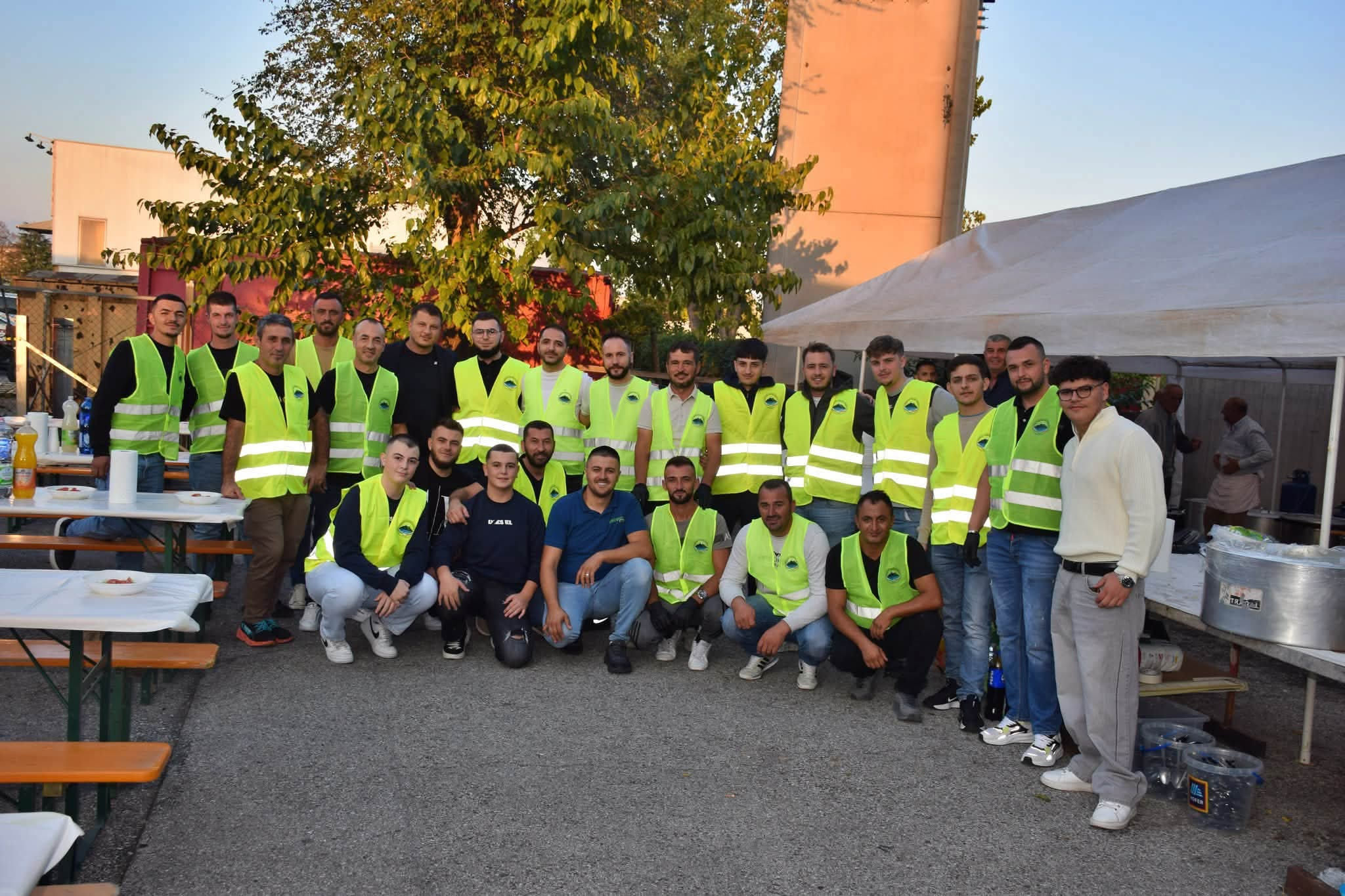 Oct 19, 2026 (Photo): An Example of Pride: Labunista Youth Organized a Successful Donor Evening in Italy The youth who organize, work, and invest themselves for the common good are the ...
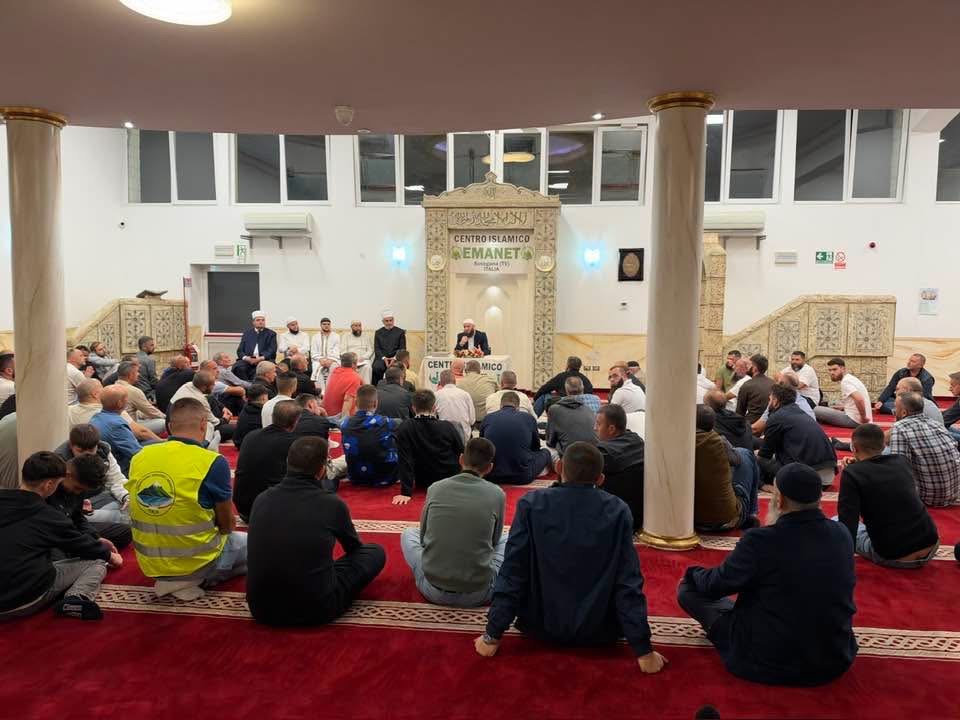 Oct 18, 2026 Huge Donation and a Memorable Evening in Susegana, Italy! The donor evening organized by the association “Labunista IT” from Conegliano pa...
 Oct 17, 2026 Dr. Edip Bekiroski Earns Specialist Title in Internal Medicine Dr. Edip Bekiroski has successfully completed his specialization in internal med...
 Oct 16, 2026 Reminder: THE HUMANITARIAN ASSOCIATION "LABUNISHTA" FROM ITALY — ORGANIZER OF THE DONOR EVENING! With great honor and responsibility, the Humanitarian Association "Labunishta" f...
 Oct 16, 2026 Labunishta Prayer – “Allah Muabet!” It is interesting that the word “muabet” originates from the Arabic word *mahabb...