
ЗБОР НА ДЕНОТ
Медиуми
Што значи „дезинформација“?
Неточна или измамлива информација што се шири намерно за да заблуди.
На пример
Некој измислува изјава на јавна личност и ја објавува како вистинска за да влијае врз читателите.



Лабунишки Мудрости Tuesday 17.11.2026

✍️ Jakub Kazimoski
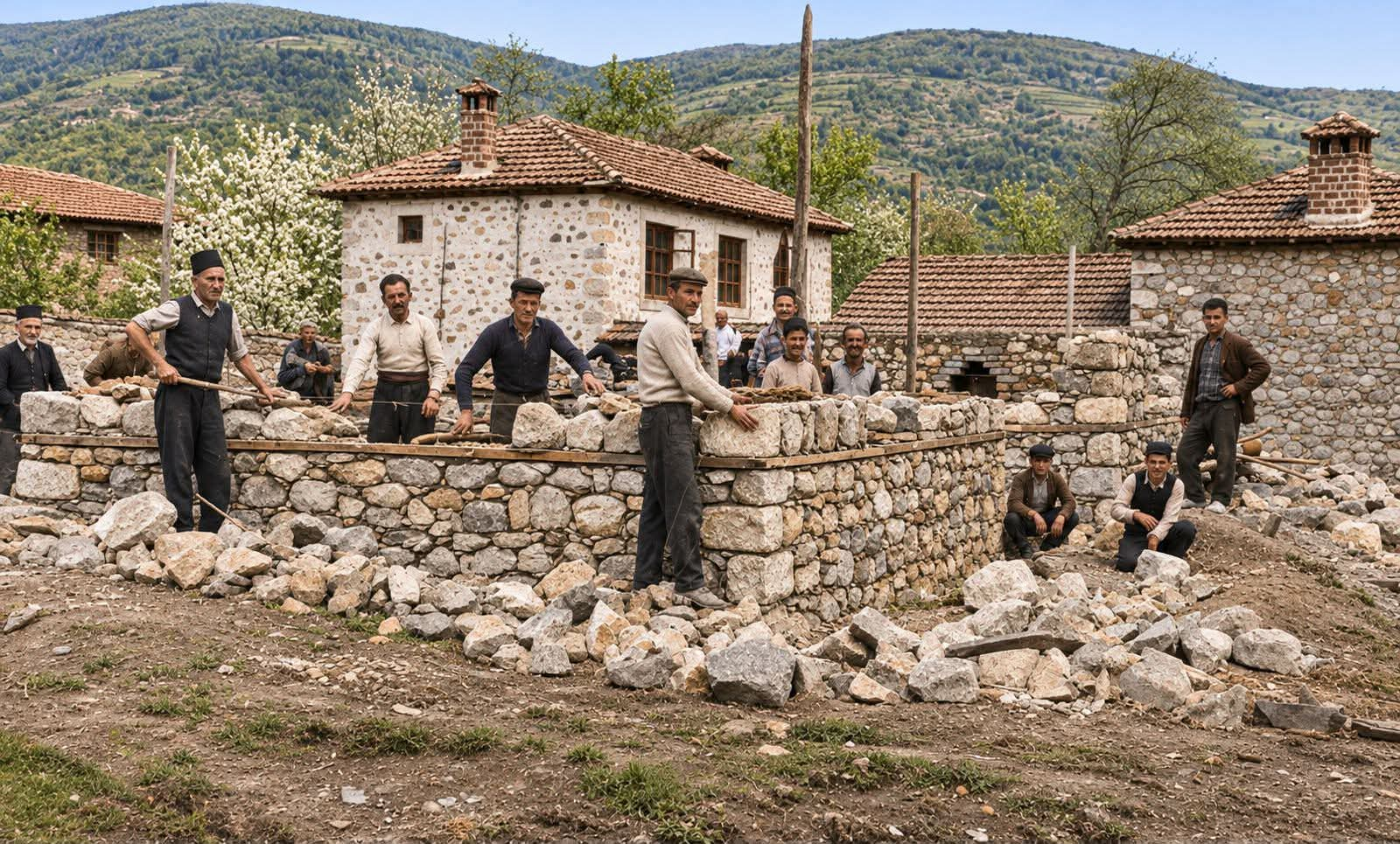
The old Labunishtani lived from their own labor. In the large families, the duties were divided already in the evening. The head of the house decided who would work the next day: someone to take care of the livestock, someone to bring wood, someone to go to the market. Some members were working away and contributed to the family's livelihood.
There was work for everyone — both the young and the older, each according to their strength and ability. Women usually carried the household duties and the daily care of preparing meals for the large family. During spring, summer, and autumn, work was done and necessities gathered to better prepare for and more easily endure the winter.
In many homes, life was modest, with a roughly similar standard of living. The bread placed on the table was the fruit of many hands and joint labor. Therefore, its value was known, and care was taken to preserve what was earned.
It was not allowed to throw away leftover food. From a young age, children were taught that if they found a piece of bread on the road, they should pick it up, kiss it, and leave it in a clean place where birds could eat it. Through such actions, they were taught to respect God's blessings and the labor invested in every bite.
When boys reached marriageable age and girls to be wed, marriages were arranged, mostly among families within the village, although brides also came from neighboring villages. With the expansion of the family, needs grew, and each generation thought about how to secure a better life for themselves and their children.
Some developed a desire for greater earnings and a more comfortable life. Hardworking and capable householders, through labor, patience, and skill, managed to realize their plans. Their success was a joy for the household, as the whole family benefited from it.
But there were also those who already had good conditions for work and earnings in the family economy. In their house, work was done and life was better than in many other families. Nevertheless, seeing others leaving to work away or start different work, they began to think that they too could more easily achieve greater earnings that way.
They saw others’ profit, but knew little about the sacrifices, uncertainty, and years spent away from loved ones. Carried by the desire to achieve the same as soon as possible, they did not always properly assess their own abilities and the conditions that awaited them. Thus, even without a great life necessity, they decided to leave secure work and go away from home.
The head, who knew them well and the situation at home, before departure would advise them:
“Son, do not look for more than bread — the loaf. Thank God, we have work, and He has given us blessing both in labor and in the fields we cultivate. Your family is here, here you have what to live honorably. Don’t look only at what others earn. Some of them were forced to leave to feed their families.
If you have a good plan, think it through, seek advice, and calculate what you can do. But don’t just chase after others and neglect your own. Let us be thankful to God for what He has given us, do our work honestly, and hope for even greater fortune and blessing.”
Despite the best advice, some still left, convinced that a better future awaited them far from home.
But the new environment, unknown work, separation from loved ones, and uncertain earnings required more strength and patience than expected. When hopes did not materialize, some regretted leaving what they had too quickly. After some time, they returned home.
Then they more clearly understood the care in the words of the head. He knew how hard it is to create conditions for a secure life and how easily one can underestimate them when comparing with others.
Returning was an opportunity to resume work, with greater respect for family labor and for what had previously seemed insufficient. The experience cost them time and trouble but helped them better understand the value of their own home and the bread they had earned.
Even today, before leaving what we have, it is good to know where we are headed and what that path demands from us. Others’ success can motivate us, but decisions must be made according to our own capabilities and real needs. Let us strive for better while appreciating the bread already on our table.
J.K. — “Wisdom of the old Labunishtani”
Медиуми
Неточна или измамлива информација што се шири намерно за да заблуди.
Некој измислува изјава на јавна личност и ја објавува како вистинска за да влијае врз читателите.
Едно прашање. Една шанса. Колку добро ги знаеш правилата?
Биди првиот што ќе одговори денес.
0 учесници во квизот денес
Медиуми
Неточна или измамлива информација што се шири намерно за да заблуди.
Некој измислува изјава на јавна личност и ја објавува како вистинска за да влијае врз читателите.
Едно прашање. Една шанса. Колку добро ги знаеш правилата?
Биди првиот што ќе одговори денес.
0 учесници во квизот денес

Muhammed Husrev (Aydinlar) was born in the village of Labunista near Struga, pre...

With deep sorrow, we announce the passing of Dr. Minur Memishoski, a respected d...

House for sale in Labuništa, Krasta area, with property deed! House area of 540 ...

During an outing in the Labuniska Bachila area, local resident Ersan Zendeloski ...


The main topic of the meeting was two serious issues that, according to attendee...

A great success for Labunista and the young talents from our region. Ejlem Bekir...

The coordinating body composed of members Safet Demiralieski, advisor to the may...

After many years of dedicated work, our dear fellow citizen Safet Demiraliyeski ...

The first residents of the village of Labunishta who had the opportunity to perf...

With special honor and pride, the residents of Labunishta extend their sincerest...